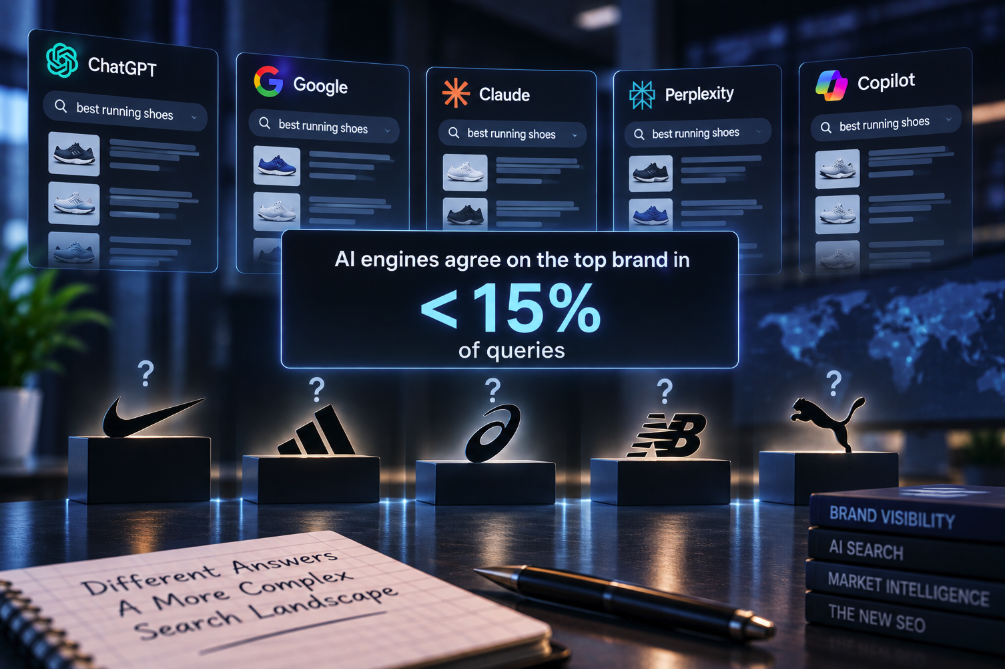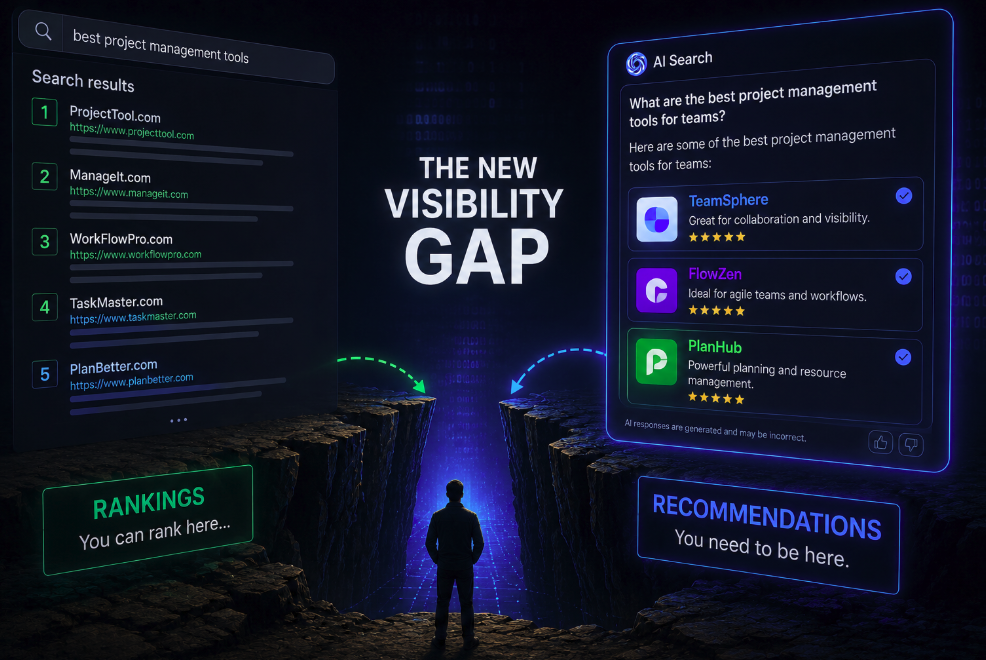
The conversation around SEO for AI agents is beginning to sound more exotic than the underlying work actually is. As ChatGPT, Perplexity, Google AI experiences and other systems retrieve information, compare alternatives and increasingly assist users with actions, marketers are understandably looking for a new optimization playbook. Yet one of the clearest emerging frameworks starts with three familiar requirements: machines must be able to access the information, understand its structure and find enough evidence to trust it.
That is the central argument in NetContentSEO's analysis of SEO for AI agents, published on September 3. The article builds on Semrush's September 2 guide to preparing websites for AI agents, which reframes established technical SEO, information architecture and editorial credibility practices for an environment in which automated systems may decide which sources a user sees before the user ever visits a website.
AI visibility begins with deciding which machines should have access
The first mistake is treating every AI-related bot as though it performs the same job. It does not. Some crawlers collect material for model training, some build retrieval indexes that can supply citations to live AI answers, and some fetch a particular URL because a user has explicitly asked an assistant to read it.
That distinction matters when publishers configure robots.txt. A company may have a legitimate policy reason to restrict a training crawler while still wanting its public content to remain eligible for retrieval and citation. Blocking every bot associated with an AI provider can therefore produce a different result from the one intended: instead of merely limiting training use, the publisher may also reduce its visibility in that provider's search or answer experience.
The correct access policy depends on the objective. Training, search retrieval and user-triggered access are separate use cases, even when they originate from the same AI company. For technical SEO teams, crawler governance is becoming a product decision as much as a server configuration task.
If the agent cannot retrieve the page, optimization ends there
Access sounds elementary, but it remains the first hard dependency. A page cannot be cited, summarized or compared if the system assembling an answer cannot retrieve the useful information from it. That makes server availability, crawl permissions and rendering architecture part of AI visibility.
Semrush recommends keeping important information available in the initial HTML rather than making essential content dependent entirely on client-side JavaScript. Different AI crawlers and retrieval systems do not necessarily execute pages with the same rendering capabilities as a full browser. A site can therefore look complete to a human while exposing a much thinner representation to a machine visitor.
The principle is consistent with conventional search engineering. Google's technical requirements for Search begin with accessibility: Googlebot must not be blocked, the page must return a successful response and it must contain indexable content. Google's documentation also makes clear that meeting those minimum requirements creates eligibility rather than guaranteeing indexing or visibility.
For AI retrieval, the same logic becomes more immediate. A live answer may be assembled under time and resource constraints. If a source repeatedly fails to load or requires a complex rendering sequence, another accessible source can become the easier candidate to use.
Structure turns a website into extractable evidence
Once access works, the next problem is interpretation. AI systems frequently need a specific passage, product attribute, limitation or factual answer rather than an entire article. Pages that communicate those units clearly are easier to retrieve and compare.
This does not require converting editorial content into a mechanical collection of one-sentence fragments. Strong human writing and machine extractability are compatible. The useful principle is that each section should have a recognizable purpose, headings should describe that purpose accurately and the opening of a section should establish its subject without forcing the reader—or retrieval system—to reconstruct several preceding paragraphs.
Consistent terminology also matters. If the same feature is described with several vague marketing labels, the system has to infer whether those labels refer to one concept or several. Stable entity names, explicit product attributes and unambiguous language reduce that inference burden.
Internal architecture helps machines understand expertise as a system
Site structure provides another layer of context. Pillar pages, focused supporting articles, descriptive internal links, current XML sitemaps and the elimination of orphan pages are familiar SEO practices, but they also help retrieval systems see relationships among pieces of content.
A single strong article demonstrates knowledge about one subject. A coherent cluster of interconnected resources can demonstrate that the publisher has built a body of work around the subject. Architecture does not manufacture expertise—the underlying content still has to deserve attention—but it makes existing expertise easier to discover and navigate.
Google's own guidance for AI features reinforces the value of these fundamentals. Its documentation for AI Overviews and AI Mode recommends allowing crawling, making content discoverable through internal links, keeping important information available as text, maintaining a good page experience and ensuring structured data matches visible content. Google explicitly says publishers do not need a special AI file or special schema markup to appear in these experiences.
Commercial pages need facts an agent can compare
The implications become particularly clear on commercial pages. An agent helping a user compare software, hotels, products or professional services needs attributes it can place against competing options. Vague claims such as “best-in-class performance” are difficult to verify and difficult to compare. A documented price, availability condition, capacity, compatibility requirement or plan limitation gives the system a concrete decision variable.
This creates pressure on a style of marketing that deliberately hides basic information until a prospect contacts sales. That approach may still have commercial reasons behind it, but it creates friction for an AI agent attempting to shortlist vendors before the user reaches any sales page. A competitor that publishes clear specifications and constraints can be represented with greater confidence.
Comparison content faces the same test. A credible “X versus Y” page should compare both options against reasonably consistent criteria. If a brand highlights only its own strengths while choosing unrelated weaknesses for the competitor, the page may be persuasive advertising but weak comparative evidence. AI systems capable of consulting multiple sources can encounter contradictory information quickly.
Trust is increasingly built outside the page itself
A company can make almost any claim on its own website. Confidence rises when independent sources corroborate that claim. Semrush therefore places off-site consistency, reputable mentions, reviews and links inside the AI-agent optimization framework rather than treating them as separate reputation exercises.
Basic entity facts are a useful example. A company name, address, opening hours, product availability or pricing model should not tell a different story depending on which public source an agent consults. Conflicting information creates uncertainty. In a system designed to synthesize several sources, inconsistency can become a reason to qualify a statement or choose a better-corroborated alternative.
This connects directly with Galloni.net's earlier experiment on making NetContentSEO easier for AI systems to reconstruct as an entity across public, machine-readable sources. That experiment did not prove a causal ranking factor, but it illustrated the right conceptual model: AI visibility can depend on whether a system can assemble a coherent picture of an entity from evidence distributed across the web.
Authorship and primary sources reduce verification friction
Editorial transparency is part of the same trust problem. Named authors, useful biographies and direct links to primary research give claims an evidentiary chain. An unattributed statistic repeated from another article forces a retrieval system to do more work to determine where the number originated and whether it remains current.
For publishers, linking to original studies, official documentation and first-party announcements is therefore more than citation etiquette. It makes the information graph easier to verify. Visible publication and update dates can also help systems assess freshness, particularly for topics where specifications, policies and prices change rapidly.
The date itself should remain meaningful. Automatically changing a “last updated” field without reviewing the underlying information does not make stale content more trustworthy. As with sitemap modification dates and other technical signals, accuracy is more valuable than synthetic freshness.
Structured data helps, but there is no magic AI schema
Structured data naturally attracts attention in discussions about machine-readable content. Standard Schema.org markup can identify an article, organization, breadcrumb trail, product and other explicit entities or attributes. Google uses supported structured data for established search features, and implementing accurate markup remains sensible technical SEO.
What current evidence does not support is the idea that adding a special schema vocabulary guarantees citations from ChatGPT, Claude, Perplexity or other LLM-based systems. Google's AI Search documentation is particularly clear: there is no special Schema.org markup required for AI Overviews or AI Mode. Google recommends that structured data accurately match the visible page content rather than creating an AI-specific markup layer.
This is an important boundary for GEO. Machine-readable structure is useful when it expresses real information consistently. It becomes speculative when marketers present unverified markup tactics as direct AI ranking factors.
Measurement should diagnose where the chain breaks
Traditional SEO measurement begins with familiar metrics such as rankings, impressions, clicks and conversions. AI systems can influence a user without generating a referral at all, so traffic alone cannot describe the full visibility picture.
A more useful diagnostic model follows the same access-structure-trust sequence. Server logs can show whether relevant crawlers or fetchers are reaching the site. Prompt monitoring and citation tracking can show whether pages are being mentioned or cited. If machines visit but never select the content, the problem may shift toward relevance, extraction or trust. If the brand appears but outdated information is repeatedly surfaced, freshness and information architecture become stronger suspects.
The value of this approach is that it discourages vague declarations that a site “doesn't rank in AI.” It asks a more operational question: at which stage does visibility fail? Discovery, retrieval, interpretation, verification and selection are different events, and each suggests a different remedy.
SEO for agents is an extension of technical and editorial discipline
The strongest conclusion from the emerging guidance is that AI-agent SEO does not require abandoning traditional search fundamentals. It requires applying them to a larger and more varied population of machine visitors.
Reliable servers mattered before generative search. Crawlable HTML mattered. Logical internal linking, accurate structured data, explicit product facts, named authors and credible external references mattered. What changes in an agentic environment is the consequence of failure. A difficult website may no longer merely lose a ranking position; it may be excluded from the small set of sources an automated system considers before making a recommendation or completing a task.
That is why access, structure and trust form a useful hierarchy. Access determines whether an agent can see the evidence. Structure determines whether it can isolate and compare that evidence. Trust determines whether it has enough confidence to repeat it. Before searching for an exotic AI optimization trick, publishers should make sure those three layers are working.