Over the past few days, a piece of news has surfaced that—if confirmed—could mark one of the most delicate moments in the recent history of Search.
According to Barry Schwartz, Google is exploring a solution that would allow websites to opt out specifically from generative search features, including:
-
AI Overviews
-
AI Mode
-
other AI-powered experiences inside the SERP
In other words: a potential opt-out mechanism.
And the immediate question is unavoidable:
Are we witnessing a new balance between Google and publishers, or just a technical compromise destined to remain marginal?
What Google Said (and Why It Matters)
Google stated:
“We are exploring the possibility of updating our controls to allow sites to opt out specifically from generative AI features in Search.”
The sentence is short, but the context is massive.
Because it comes precisely at a time when global tension is rising around one key issue:
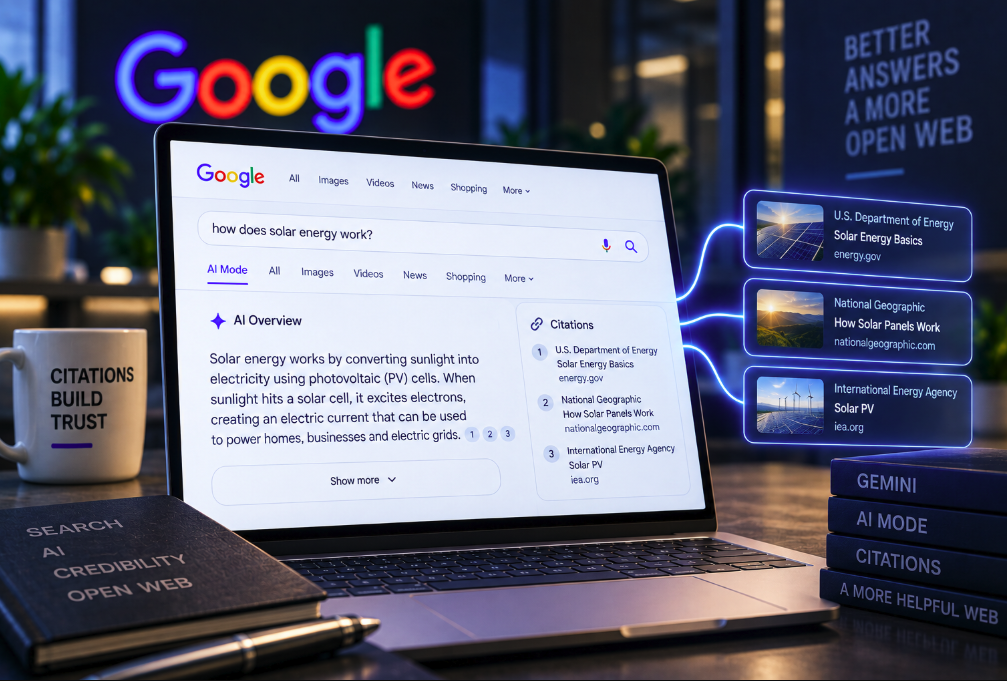
generative answers are using editorial content without returning traffic or visible attribution.
For many publishers, this is no longer “search.”
It is extraction.
Why Now? The Role of the UK CMA
Google linked this evaluation to new requirements from the UK’s Competition and Markets Authority (CMA).
In simple terms:
-
regulators are watching
-
generative search has competitive implications
-
the line between engine and publisher is getting thinner
This regulatory pressure is producing something new:
Google can no longer simply say “that’s how it works.”
It must demonstrate that some form of choice exists.
Opt-Out: A Real Solution or an Impossible Choice?
Here comes the crucial point.
Google itself added:
“Any new control must avoid disrupting Search in a way that could create a fragmented or confusing experience for users.”
Practical translation:
✔ we will give you an option
❌ but it cannot change the system too much
So the real question becomes:
what kind of opt-out is possible without ‘breaking Google’?
Because generative search is not an isolated feature.
It is a structural transformation.
The Publisher Dilemma: Does Opting Out Mean Disappearing?
Let’s imagine the scenario.
A site says:
“I don’t want my content to feed AI Overviews.”
Fair enough.
But then:
-
will it appear less in AI answers?
-
will visibility drop?
-
will it be indirectly penalized?
-
will it be considered “less useful” inside the generative system?
This is the real tension.
Opt-out could become a theoretical right, but an expensive one.
Almost like saying:
you can leave… but outside there is no traffic.
The Citation Problem: The True Root Cause
On X, many professionals have been pointing out a clear pattern:
-
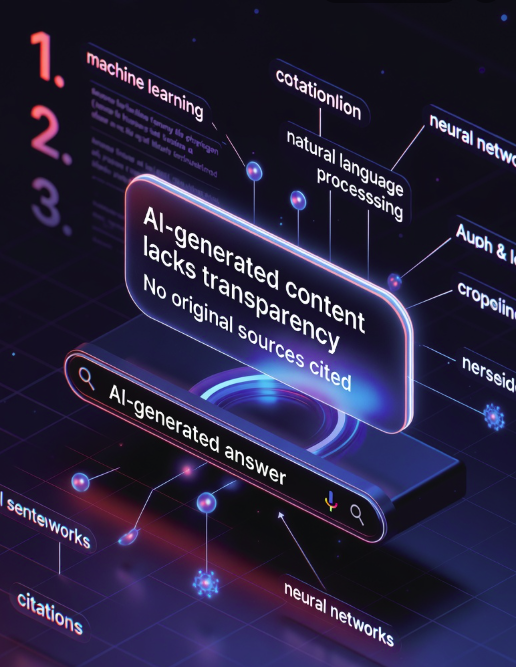
AI Overviews often lack transparent linking
-
sources get absorbed
-
traffic decreases
-
attribution becomes opaque
And in an information ecosystem, this is critical.
Because without citations:
-
there is no incentive to produce high-quality content
-
editorial sustainability collapses
-
an open web cannot survive
Search becomes a closed layer sitting on top of the internet.
SEO in 2026: From Rankings to Citability
This rumor fits perfectly into the larger shift happening right now:
SEO is no longer just about ranking.
It is about citability.
In a generative world, the real question is not:
“Am I number one?”
But:
“Am I recognized as a source?”
And if Google introduces opt-out, it is implicitly admitting something important:
sources matter.
Not only as content, but as rights, incentives, and infrastructure.
Reddit, Communities, and Backlash: Social Pressure Is Rising
It is not a coincidence that these discussions are exploding across Reddit, Hacker News, and X.
Because sentiment is shifting:
-
publishers are exhausted
-
users notice answers without sources
-
the ecosystem increasingly perceives unfairness
And when search loses transparency, it loses trust.
Conclusion: Choice, Trust, and the Future of Search
If Google truly offers a control to disable AI Overviews, it will be a symbolic turning point.
But the real question remains:
is it a meaningful choice—or just a regulatory formality?
In 2026, Search has entered a new phase:
-
generative
-
distributive
-
epistemological
And the future will not be decided only by rankings.
It will be decided by attribution, trust, and citability.
Because one thing is certain:
Search can evolve.
But it cannot do so by erasing the sources.
❓ FAQ
1. Will Google really allow publishers to disable AI Overviews?
For now, it is only an official exploration (“we are exploring”), tied to regulatory pressure in the UK.
2. Does opting out mean losing visibility?
Possibly. If search becomes generative, leaving the system could reduce exposure inside AI answers.
3. What is the real SEO priority in 2026?
Not only rankings, but citability: being recognized as a trusted source in generative answers.